What is a dental implant?
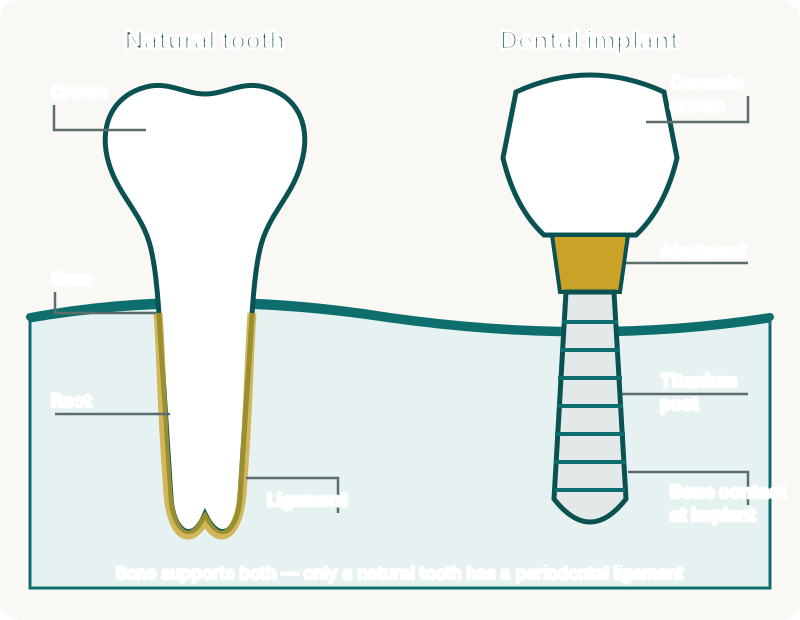
A dental implant is a small titanium post that's placed into the jawbone to act as an artificial tooth root. Once it has fused with the surrounding bone — a process called osseointegration — a crown is attached on top to restore the look and function of the missing tooth.
Because the implant is anchored in the jawbone itself, rather than resting on or clipping to neighbouring teeth, it's generally considered a more permanent option than a bridge or a removable denture — though which option suits you best depends on your individual case.
Is a dental implant right for you?
Most healthy adults who have lost one or more teeth, and who have enough healthy jawbone to support an implant, are potential candidates. Some factors — such as gum health, bone density, certain medical conditions, or smoking — can affect suitability, and may need to be addressed before treatment.
There's no way to know for certain without an assessment. A consultation with Dr Cassim, including a clinical exam and imaging, will confirm whether an implant is a good option for you.
How the process works
- Consultation and assessment. A clinical examination and imaging (digital or 3D X-rays) to assess your jawbone, gums and remaining teeth, and to plan the treatment.
- Implant placement. The titanium implant is placed into the jawbone under local anaesthetic.
- Healing period. Time is needed for the implant to fuse securely with the jawbone before it can safely support a crown. This varies from patient to patient — Dr Cassim will give you a personalised timeline.
- Restoration. Once healed, a custom-made crown is fitted onto the implant, matched to your natural teeth.
Why patients choose implants
- Designed to look, feel and function like a natural tooth
- Doesn't rely on grinding down or clipping onto neighbouring healthy teeth, unlike some bridges
- Can help support the surrounding jawbone, which may otherwise lose density after a tooth is lost
- A long-term option when properly cared for, with good oral hygiene and regular check-ups
As with any dental treatment, individual results vary — Dr Cassim will talk you through what to realistically expect for your case.
Looking after your implant
Caring for a dental implant is much like caring for a natural tooth: brush twice daily, clean between your teeth daily (floss or an interdental brush), and keep up regular check-ups so Dr Cassim can monitor it over time. See our guide to brushing and flossing for the everyday basics.
Cost of dental implants
Implant treatment at our Sandton City practice typically ranges from R15,000 to R40,000, depending on your individual case and the number of implants needed. The exact cost is confirmed after your assessment, and most medical aids are accepted — bring your medical aid card to your consultation.