What is a root canal?
Inside every tooth, beneath the enamel and dentine, is a soft tissue called pulp, containing nerves and blood vessels. When this pulp becomes infected or inflamed — usually from deep decay, a crack, or trauma to the tooth — it can cause pain and, left untreated, lead to an abscess.
Root canal treatment (also called endodontic therapy) removes this damaged tissue, cleans and shapes the empty canal, then fills and seals it. The tooth is then usually protected with a filling or crown. The aim is to treat the infection while keeping your natural tooth in place, rather than extracting it.
Signs you might need one
These can point to a problem that may need root canal treatment, though they can also have other causes — an examination is the only way to know for sure:
- Persistent or throbbing tooth pain
- Sensitivity to hot or cold that lingers well after the trigger is removed
- Swelling or tenderness in the gum near a tooth
- A tooth that has darkened in colour
- Pain when biting or chewing
If you're in pain now, please call 011 883 3005 (or 079 406 3045 after hours) rather than waiting for a routine appointment.
How the process works
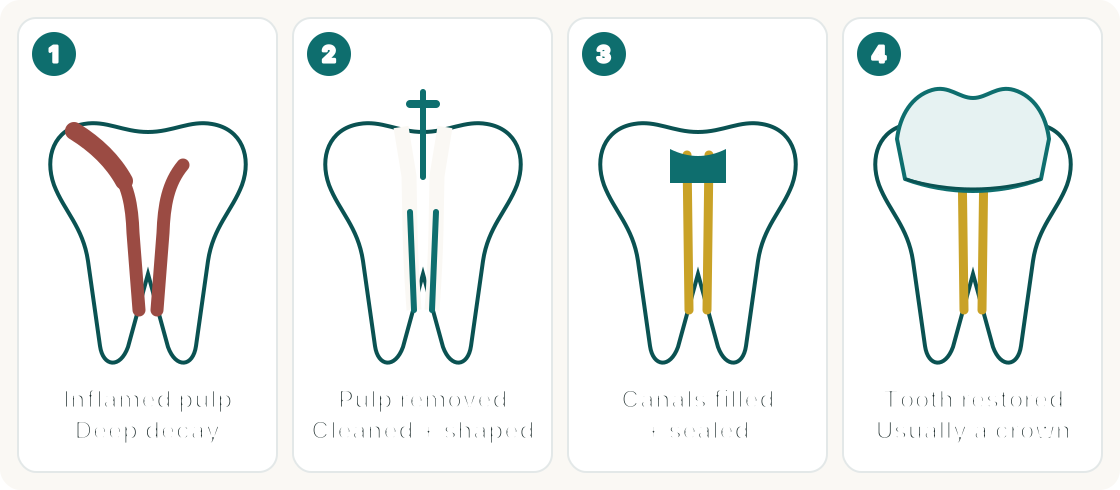
- Diagnosis. A clinical examination and an X-ray confirm the diagnosis and show the extent of the problem.
- Local anaesthetic. The area is numbed, and a small opening is made in the top of the tooth to reach the pulp.
- Cleaning and shaping. The infected or inflamed pulp is removed, and the canal is carefully cleaned and shaped.
- Filling and sealing. The cleaned canal is filled with a biocompatible material and sealed.
- Restoration. The tooth is protected afterwards with a filling or, especially for back teeth, a crown.
Is it painful?
This is the question almost everyone asks. With modern local anaesthetic, most patients find the procedure itself no more uncomfortable than having a filling done. The pain people associate with "a root canal" is usually caused by the underlying infection beforehand — the treatment is aimed at relieving that pain, not causing it. Some tenderness for a few days afterwards is normal and can usually be managed with over-the-counter pain relief.
Why treat the tooth rather than remove it
- Keeps your natural tooth, along with its normal biting and chewing function
- Avoids the gap left by an extraction, and the need to later consider a bridge or implant to fill it
- Helps prevent the infection from spreading further
Whether a tooth can be saved with root canal treatment, or is better extracted, depends on the individual case — Dr Cassim will talk you through the options for your tooth.
Looking after the tooth afterwards
Once treated, a tooth is cared for like any other: brush twice daily, clean between your teeth daily, and keep up regular check-ups. Avoid chewing on the tooth with hard foods until any planned crown or filling is in place. See our guide to brushing and flossing for the everyday basics.
Cost of root canal treatment
Cost depends on which tooth is affected and the complexity of treatment, so it's quoted after an evaluation rather than as a flat fee. Most medical aids are accepted — bring your medical aid card to your appointment.